Episodic memory
How do intelligent systems bind events to temporal and situational context, and which representations preserve the contextualized structure of an experience?
Read more →Machine learning · Memory · NeuroAI
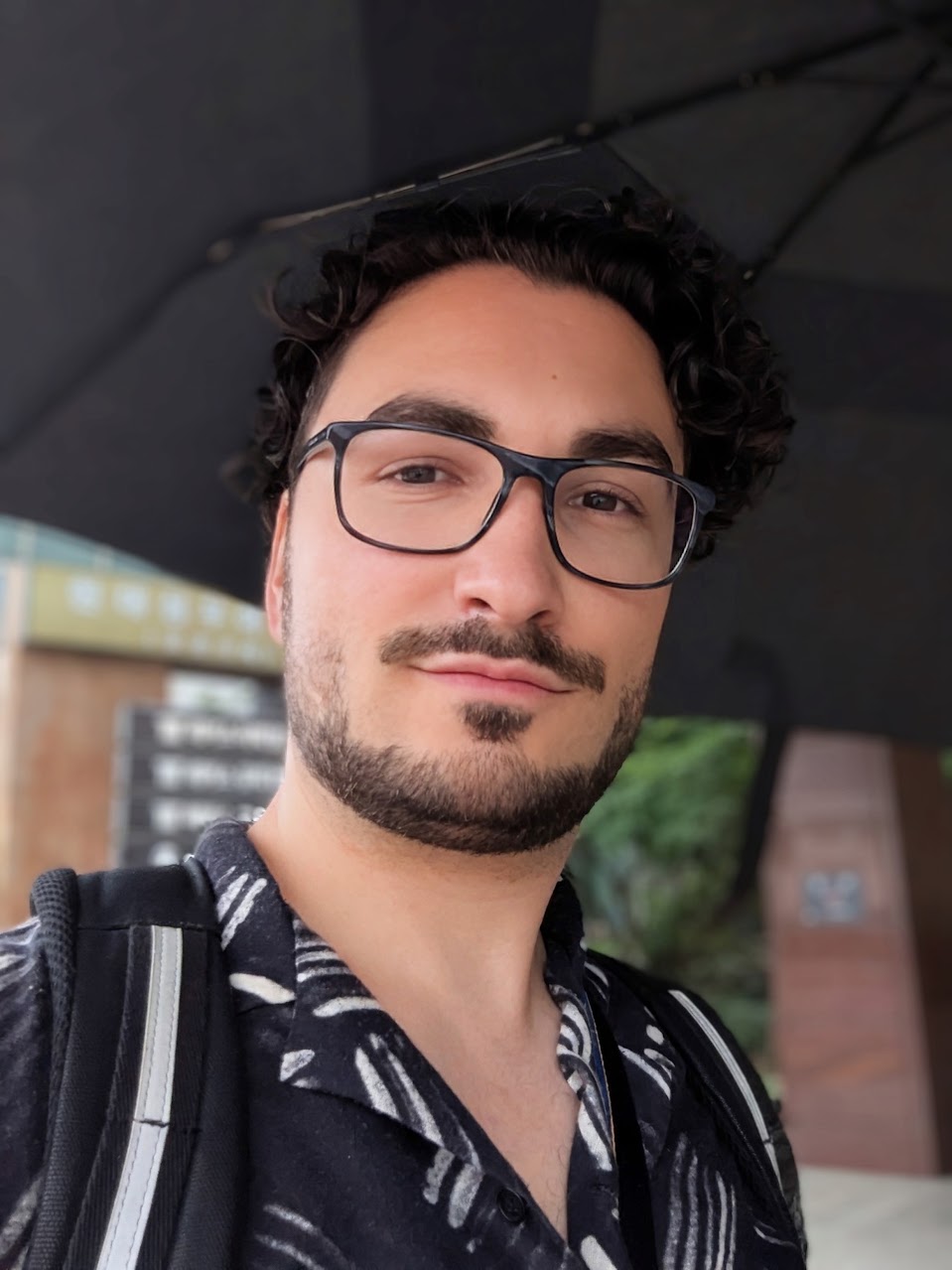
I am a PhD candidate at the Max Planck Institute for Software Systems (MPI-SWS) and Saarland University, advised by Mariya Toneva and Isabel Valera. My research asks how intelligent systems encode experience in context, reinstate that context during remembering, and control how past experience shapes ongoing computation. I use artificial models as experimentally tractable systems for studying these mechanisms and connect them to questions from human memory and neuroscience.
Research
I treat episodic memory as a computational problem centered on three operations: representing experience in context, reinstating relevant context during retrieval, and controlling how memory enters ongoing computation. These questions can be studied through behavior, internal representations, causal mechanisms, and formal principles, creating a common language for comparison across artificial and biological systems.
How do intelligent systems bind events to temporal and situational context, and which representations preserve the contextualized structure of an experience?
Read more →How is contextual information represented and reinstated during remembering? I combine behavioral experiments, mechanistic analysis, and theory to identify concrete computations.
Read more →How do intelligent systems decide when to retrieve, preserve, consolidate, or reinstate information as part of ongoing computation?
Read more →Selected publications
Long-context LLMs reproduce a human temporal-distance effect, represent time along a one-dimensional code, and use a specific attention head to reinstate temporal context during retrieval.
Introduces SORT and Book-SORT, adapting a human temporal-order memory paradigm to LLMs and validating the naturalistic task in a human experiment.
Develops a framework for episodic memory in long-term agents around single-shot, contextualized, continuously learned experience.
Research questions
How is contextual information represented so that an earlier event can be recovered as part of a specific episode?
Which representational and computational principles recur across artificial and biological memory?
How does cognitive control determine when past experience should be retrieved, consolidated, or reinterpreted?
Background
Before my PhD, I studied Cognitive Science at Osnabrück University and worked with Tim Kietzmann and Adrien Doerig on active foveated vision at the intersection of machine learning and computational neuroscience, using reinforcement learning to model where an agent chooses to look. Earlier, I studied Philosophy and Economics at the University of Bremen.
That training shapes how I approach memory: start from cognitively meaningful phenomena, formulate them as computational problems, and connect behavior to internal representation, mechanism, and control.
Updates
Work on temporal context reinstatement accepted at ICML 2026.
Work on competing literal and figurative representations in LLMs published as a long paper at EACL 2026.
Teaching assistant at the CAJAL Neuroscience & AI summer school in Lisbon.